ICGOO在线商城 > 6-1462000-2
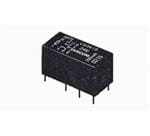
 Datasheet下载
- 型号: 6-1462000-2
- 制造商: CORCOM/TYCO ELECTRONICS
- 库位|库存: xxxx|xxxx
- 要求:
| 数量阶梯 | 香港交货 | 国内含税 |
| +xxxx | $xxxx | ¥xxxx |
查看当月历史价格
查看今年历史价格
6-1462000-2产品简介:
ICGOO电子元器件商城为您提供6-1462000-2由CORCOM/TYCO ELECTRONICS设计生产,在icgoo商城现货销售,并且可以通过原厂、代理商等渠道进行代购。 提供6-1462000-2价格参考¥18.36-¥18.36以及CORCOM/TYCO ELECTRONICS6-1462000-2封装/规格参数等产品信息。 你可以下载6-1462000-2参考资料、Datasheet数据手册功能说明书, 资料中有6-1462000-2详细功能的应用电路图电压和使用方法及教程。
| 参数 | 数值 |
| 3D型号 | http://www.te.com/commerce/DocumentDelivery/DDEController?Action=srchrtrv&DocNm=CVM_1462000-2&DocType=Customer+View+Model&DocLang=3D |
| 产品目录 | |
| 描述 | RELAY TELECOM DPDT 2A 12V |
| 产品分类 | |
| 品牌 | TE Connectivity |
| 数据手册 | http://www.te.com/commerce/DocumentDelivery/DDEController?Action=srchrtrv&DocNm=1462000-2&DocType=Customer+Drawing&DocLang=English点击此处下载产品Datasheet |
| 产品图片 |
|
| 产品型号 | 6-1462000-2 |
| rohs | 无铅 / 符合限制有害物质指令(RoHS)规范要求 |
| 产品系列 | MT2,AXICOM |
| 关闭电压(最小值) | 1.2 VDC |
| 其它名称 | 6-1462000-2-ND |
| 包装 | 管件 |
| 安装类型 | 通孔 |
| 导通电压(最大值) | 7.8 VDC |
| 工作时间 | 5ms |
| 工作温度 | -55°C ~ 85°C |
| 开关电压 | 250VAC,220VDC - 最小值 |
| 标准包装 | 25 |
| 特性 | - |
| 端子类型 | PC 引脚 |
| 线圈功率 | 550 mW |
| 线圈电压 | 12VDC |
| 线圈电流 | 45.8mA |
| 线圈电阻 | 280 欧姆 |
| 线圈类型 | 无锁存 |
| 继电器类型 | 电信 |
| 触头外形 | DPDT(2 C 型) |
| 触头材料 | 银镍(AgNi),金(Au) |
| 释放时间 | 3ms |
| 额定接触(电流) | 2A |



- 商务部:美国ITC正式对集成电路等产品启动337调查
- 曝三星4nm工艺存在良率问题 高通将骁龙8 Gen1或转产台积电
- 太阳诱电将投资9.5亿元在常州建新厂生产MLCC 预计2023年完工
- 英特尔发布欧洲新工厂建设计划 深化IDM 2.0 战略
- 台积电先进制程称霸业界 有大客户加持明年业绩稳了
- 达到5530亿美元!SIA预计今年全球半导体销售额将创下新高
- 英特尔拟将自动驾驶子公司Mobileye上市 估值或超500亿美元
- 三星加码芯片和SET,合并消费电子和移动部门,撤换高东真等 CEO
- 三星电子宣布重大人事变动 还合并消费电子和移动部门
- 海关总署:前11个月进口集成电路产品价值2.52万亿元 增长14.8%

PDF Datasheet 数据手册内容提取
AXICOM Telecom- Signal- RF Relays Electromechanical relays are one of the most robust and most reliable electronic components. In order to achieve and guarantee the excellent performance of AXICOM relays, some precautions must be taken during transportation, storage, handling and assembly and testing of the relays. Following this guideline enables proper treatment of the relays during the critical phase in the relay life. A. Transport In transit, care has to be taken to avoid excessive shock and vibration. Mechanical stress can lead to changes in operating characteristics or to internal damage of the relay (see vibration and shock resistance). If mechanical stress is suspected, the relay should be checked and tested before use. Whenever relays arrive in damaged boxes at customer sides, there is a potential risk of transportation damage. Fig. 1: Proper packing of relays for transportation B. Packaging Different packaging is used depending on the relay type and with regard to any specific requirements during shipment or production. THT relays are packed in plastic tubes with stoppers on both sides of the tubes. Plugs on both sides shall be removed – especially after long storage time – in order to prevent firstly sticking of the relay on the plug and then falling down to the pick place. C. Handling Modern relays are high precision components that are sensitive to mechanical stress and abusive handling. Care must be taken when handling the relay during all stages of production. Especially care must be taken, that relays are not dropped to the floor. Dropped relays shall not be used anymore and shall be scraped. AppNote THT Relays.doc page 1 3/9/2007
AXICOM Telecom- Signal- RF Relays D. Storage Relays should be stored in a clean area within the specified temperature limits. Extreme humidity and condensation can cause corrosion of the metal parts on the inside as well as the outside of the relay. THT relays do not reach the same temperature level as SMT relays and are therefore not considered to be moisture sensitive devices. Increasing contact resistance over a time period, due to the formation of oxides and other layers, is to be expected for most contact materials. This degradation is dependent on the ambient atmosphere and is more rapid at high temperatures. Special care has to be taken if relays are tested or used with low contact loads after being stored for prolonged periods. Deterioration of contact resistance during storage is reduced in the case of plastic or hermetically sealed relays. E. Testing During incoming inspection, special care has to be taken not to bend the relay terminals. Internal failure (e.g. breaking of coil wires) or the degradation of sealing properties could be the consequence. F. Automatic handling The handling pressure or force of automatic feeders or robots has to be adjusted to avoid mechanical damage such as cracking the relay case. The design of the relay should be such that when held by its case or inserted into a socket, it does not become detached. Due to the reduced size of modern Telecom and Signal Relays, they can be placed by pick and place machines with a speed similar to passive PCB components. It is possible to use a mechanical as well as vacuum picker. G. Manual handling When relays are manually placed on PCB’s, relays shall not dropped into a bin or on a hard table. They shall directly be picked from the tube, in order to prevent bent terminals and excess mechanical shock. Relays which were dropped to the floor or from a height of more than 250 mm are potentially damaged. After long storage at high temperature it might happen that relays are picking on the plug and are suddenly released. This might cause a major mechanical shock and might destroy the relay. Do not pour relays from tube not orientated to a Relays shall be placed carefully on a plate and hard table the plate should be covered with some soft material Fig. 2: Proper and improper release of relays from the tube. AppNote THT Relays.doc page 2 3/9/2007
AXICOM Telecom- Signal- RF Relays H. Insertion When inserting the relay into the PCB, do not press or use undue force on the pins as this may compromise the pin seal or affect the integrity of the coil connections. I. Clinching Terminals should not be bent to hold the relay in place on the PCB to aid flow soldering. Bending or cutting the pins after insertion generates extreme mechanical stress, especially in the case of rectangular PCB terminals. Neither the relay performance nor sealing of flux resistant and plastic or hermetically sealed relays can be guaranteed if the terminals have been bent. J. Fluxing Fluxing has to be carefully considered depending on the type of relay. Unsealed relays should be hand soldered to avoid flux contamination of the relay. Flux should be used sparingly and evenly and joints examined after soldering. If flow soldering is used however, the flux level should be set so that it cannot flood onto the PCB. This is particularly critical if the PCB is dual tracked and there are unused holes under the body of the unsealed relay. Flux resistant and sealed relays may be used with most fluxing procedures due to the seal between the pins and the relay base. The PCB should not be flooded as normally only the pins are sealed and flux could possibly penetrate the relay by capillary action between the relay cover and base. If there is any doubt about the fluxing process, fully sealed relays (plastic or hermetically sealed) should be used. K. Preheating Before flow soldering, the entire PCB should be preheated. This is to dry the flux and prevent it from penetrating the relay during soldering. Also, better quality solder joints are achieved as a result of more uniform temperature distribution. Preheating should be carried out at 100°C for approximately 1 minute. Excessive exposure to high temperatures may affect the relays characteristics. L. Wave soldering The automated soldering process has to be controlled carefully in order not to impair the performance of the relays. Flux resistant and sealed relays can be used with most dip or wave soldering processes. The solder bath temperature should be 265°C maximum and the soldering time should not exceed 5 seconds. The solder level has to be adjusted so that it does not flood the printed circuit board surface. M. Hand soldering If the relays are soldered by hand, the process should be completed as quickly as possible. The same temperature and time limits apply as for wave soldering – A tip temperature of 300°C and a soldering time of 3 s shall not be exceeded. N. Chemical cleaning In modern PCB assembly less and less cleaning is used as many no clean fluxes are already available on the market. If cleaning is necessary, certain precautions have to be taken. Unsealed relays: Only the base of the PCB should be cleaned to prevent penetration of solvent and dissolved flux into the relay. Any other cleaning method involving potential contamination of unsealed relays should be avoided. Flux resistant relays: Immersion cleaning is not possible with these types of relays. Only the soldered side should be washed and care has to be taken not to allow washing solution to flood the PCB surface. Sealed relays: Only fully sealed relays should be immersion cleaned. Even then the PCB should be allowed to cool before the washing process in order not to damage the seal due to thermal shock or pressure differential. When using high pressure cleaning processes, special care has to be taken to avoid any ingress into the relay. Liquids under high pressure can damage the seal of the relay. AppNote THT Relays.doc page 3 3/9/2007
AXICOM Telecom- Signal- RF Relays Ultrasonic cleaning is not recommended as this can cause friction welding of the contacts, especially in the case of gold-plated contacts. If ultrasonic cleaning cannot be avoided, it should be completed as quickly as possible. Modern cleaning equipment uses water, alcohol or alkaline solutions, which are more environmentally friendly than CFC's. If other cleaning solvents are used, ensure that the chemicals are suitable for the relay. The use of unsuitable solvents can cause cracking or discoloring of the plastic parts. Suitable solvents include isopropyl alcohol (alcohol-based solvents), water with wetting agents. Unsuitable solvents are acetone, ethyl acetate, aqueous alkalines, phenolic combinations, thinner- based solvents, chlorosene-based solvents, trichlene-based solvents and chlorine. Fluor-based cleaning solvents like Freon are forbidden today. Special care must be taken on the temperature of the cleaning and rinsing liquid. The temperature of the washing and rinsing liquid shall be similar and not deviate by more than 10 °C. Fig. 3: Cleaning of PCB’s. It is most essential to keep the temperature level during cleaning, rincing and drying constant. The temperature shall not deviate by more than ±10°C. Ultrasonic cleaning is strongly not recommended for signal relays, as this might result in cold welding of the gold contacts. AppNote THT Relays.doc page 4 3/9/2007
AXICOM Telecom- Signal- RF Relays O. Coating Coating of relays on PCB’s is basically possible. Only relays which are at least wash tight (RTIII) can be coated. In case relays with less protection are coated, there is a high risk that resin will enter the relay and destroy the relay. Suitable are Epoxy, Urethane and Fluorine coatings. Absolutely forbidden are Silicone coatings. Fig. 4: Coating of relays on PCB’s AppNote THT Relays.doc page 5 3/9/2007
Mouser Electronics Authorized Distributor Click to View Pricing, Inventory, Delivery & Lifecycle Information: T E Connectivity: 6-1462000-2